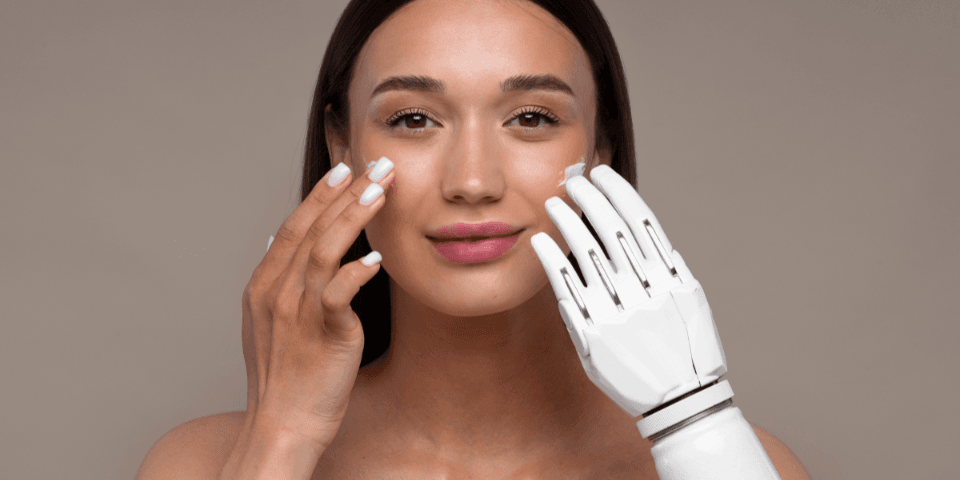

Most clinics still treat devices and skincare as two separate things. One is a treatment. The other is maintenance. That split is costing results.
When you combine the two correctly, something different happens. The device primes the skin. The skincare does more because of it. And the client sees faster, more visible change. That right there is the best way to increase your ROI – Not only will you sell more but also deliver better outcomes, increasing client retention.
So, what does the combination actually do? Let’s break it down.
Does the Skin Absorb Skincare Products Better After a Device Treatment?
Yes. Significantly better. Here’s why it matters.
Most topical products fail at the stratum corneum. It’s a tough barrier. Without help, active ingredients like hyaluronic acid, peptides, or vitamin C sit on the surface and absorb slowly — if at all.
Devices change that equation:
- Microneedling: Creates micro-channels, allowing serums to penetrate up to 80% deeper compared to topical application
- Radiofrequency (RF): Increases local circulation by heating the dermis. This makes the skin more open to follow-up activities.
- Ultrasound Devices: Help loosen the intercellular matrix temporarily, giving products a direct pathway deeper into the skin layers
- IPL & Laser Treatments: Safely remove the skin’s outermost epidermal barrier. This makes the 48-hour post-treatment window a high-absorption period
This isn’t a marketing claim. It’s basic dermal physiology. The device opens a door. The right skincare walks through it.
Does Pairing Skincare with Devices Actually Improve Treatment Results?
The short answer: yes. The longer answer is that it depends on what you pair and when.
Clinics that have built structured post-device protocols report:
- Faster visible improvement in pigmentation, texture, and firmness
- Longer-lasting results between sessions
- Higher client satisfaction scores
- Fewer post-treatment complaints, like prolonged redness or dryness
What drives those numbers?
- Barrier repair products (ceramides, niacinamide) applied after ablative treatments reduce recovery time
- Growth factor serums applied post-microneedling amplify collagen stimulation
- SPF combined with laser programs protect fresh skin from UV-triggered PIH (post-inflammatory hyperpigmentation)
- Retinoids used between device sessions maintain cell turnover without disrupting the device cycle
The device creates a biological moment. The right product extends it.
Can Combining Both Approaches Reduce the Number of Sessions Clients Need?
Often, yes. And that’s a compelling conversation to have with clients.
When skincare actively supports the device’s mechanism, the skin recovers faster and holds results longer. Clients aren’t starting from scratch at each visit.
- A client doing RF without a supporting home routine may need 6 sessions to see meaningful results
- The same client using a targeted peptide + hydration protocol at home may see equivalent results in 4
For clinics, this might sound like less revenue. It’s actually the opposite. Clients who see results faster trust the process more. They refer. They continue with maintenance programs rather than dropping out. The economics work in your favor.
What Are the Business Advantages for Aesthetic Clinics and Distributors?
This is where it gets commercially interesting.
For Clinics
- Skincare retail becomes a natural extension of treatment — not a pushy add-on
- Protocol-based selling is easier to train staff on (“after every RF session, clients receive this serum”)
- Average spend per visit increases without increasing session time
- Client outcomes improve, which means better before/after photos, more referrals, and stronger reviews
For Distributors and B2B Brands
- Device-aligned skincare products are easier to position and differentiate
- Clinical protocols provide a built-in sales narrative (“designed to work with microneedling”)
- Repeat purchase rates on consumables outperform one-time device sales
- Bundling creates stickier client relationships with clinic buyers
The combination model creates a recurring revenue stream on top of a capital equipment sale. That’s a structurally better business.
What Should You Watch Out for When Pairing Devices with Skincare?
Not every combination works. Some are actively harmful.
- AHAs/BHAs Post-Ablative Treatment — These exfoliate already compromised skin and can trigger irritation or scarring
- Vitamin C Immediately Post-Laser — Highly acidic formulations on fresh skin can cause sensitization
- Occlusive Moisturizers Over Open Channels — Trapping bacteria into micro-wounds is a real infection risk
- Retinoids within 24–48 Hours of Microneedling — The skin can’t handle strong cell-turnover actives right after needling
The key is having a clear protocol. Not a general recommendation. A specific, step-by-step guide for what goes on the skin at what point in the treatment cycle. Clinics that have this see fewer adverse events and more consistent results.
The Bottom Line
Devices and skincare work better together than either does alone. The device creates a biological window. The skincare product capitalizes on it. The client sees better results. The clinic retains them longer.
For B2B players, that’s the pitch: it’s not about selling more products. It’s about building a complete outcome model that clients actually stick with.
The clinics doing this already are pulling ahead. The ones still treating devices and skincare as separate departments are leaving both money and results on the table.